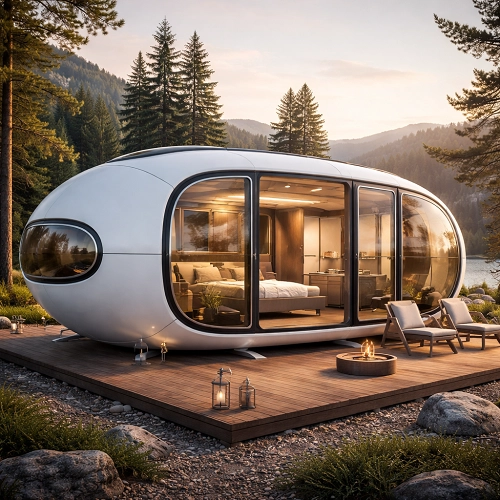
Portable prefabricated space capsule houses—often called capsule homes, modular pods, or micro-prefab units—represent a new generation of compact, factory-built dwellings designed for mobility, efficiency, and rapid deployment. Inspired by aerospace engineering and minimalist living, these structures combine advanced materials, modular construction, and integrated systems to deliver comfortable, self-contained housing that can be transported and installed with minimal site work.
As housing shortages, disaster response needs, remote work, and sustainable living gain prominence, space capsule houses are emerging as a versatile solution across residential, commercial, and institutional sectors.
What Are Space Capsule Houses?
Space capsule houses are small to mid-sized prefabricated living units manufactured in controlled factory environments and delivered to site largely complete.
Their defining characteristics include:
- Compact, capsule-like forms (often oval, cylindrical, or faceted)
- High structural efficiency, inspired by aircraft and spacecraft design
- Plug-and-play systems (electrical, plumbing, HVAC)
- Portability, allowing relocation with cranes, trucks, or containers
- Modular scalability, enabling multiple units to be combined
While the “space capsule” name evokes futuristic imagery, the core concept focuses on precision manufacturing, durability, and optimized space usage.
Design Philosophy and Architecture
The architecture of capsule houses prioritizes function and efficiency without sacrificing aesthetics.
Key design principles include:
- Aerodynamic geometry: Rounded edges reduce material stress and improve structural integrity during transport.
- Open-plan interiors: Multifunctional spaces replace traditional room layouts.
- Built-in furniture: Fold-down beds, integrated storage, and convertible seating maximize usable area.
- Large windows and skylights: Offset the compact footprint and enhance natural lighting.
Design styles range from ultra-modern and minimalist to warm, Scandinavian-inspired interiors, depending on target use and market.
Materials and Construction
Space capsule houses rely on lightweight yet strong materials similar to those used in transportation and aerospace industries.
Common materials include:
- Structural frames: Galvanized steel, aluminum alloy, or composite frames
- Exterior shells: Aluminum panels, fiber-reinforced plastics (FRP), or insulated sandwich panels
- Insulation: Polyurethane foam, rock wool, or vacuum-insulated panels (VIPs)
- Interior finishes: Marine-grade plywood, eco-friendly laminates, or fire-retardant composites
Factory fabrication ensures consistent quality, reduced waste, and tighter tolerances compared to traditional on-site construction.
Integrated Systems and Technology
One of the biggest advantages of capsule houses is their high level of system integration.
Typical systems include:
- Electrical: Pre-wired lighting, outlets, smart switches, and energy monitoring
- Plumbing: Compact wet-bath modules, water-saving fixtures, and optional graywater recycling
- HVAC: Mini-split heat pumps, radiant floor heating, or energy recovery ventilation
- Smart home features: App-controlled lighting, climate, security, and access control
Many units are designed to be off-grid capable, supporting solar panels, battery storage, and water tanks.
Portability and Installation
Portability is central to the capsule house concept.
- Units are sized to comply with road, rail, or container shipping standards
- Installation often requires minimal foundations, such as concrete pads, screw piles, or steel frames
- Setup times can range from a few hours to a few days, depending on site conditions
This makes them ideal for temporary or semi-permanent applications where speed and flexibility matter.
Common Use Cases
Portable prefabricated space capsule houses are used in a wide range of scenarios:
Residential living
- Micro-homes for individuals or couples
- Backyard accessory dwelling units (ADUs)
Hospitality
- Glamping resorts and eco-lodges
- Boutique hotels and tourist accommodations
Remote and industrial sites
- Worker housing for mining, energy, or infrastructure projects
Emergency and disaster relief
- Rapid deployment shelters after natural disasters
Commercial and public use
- Pop-up offices, clinics, classrooms, or exhibition spaces
Their modularity allows operators to scale capacity up or down as needed.
Benefits and Advantages
Space capsule houses offer several compelling advantages:
- Speed: Factory production drastically reduces construction time
- Cost predictability: Fewer on-site variables mean more accurate budgeting
- Quality control: Controlled manufacturing improves durability and finish
- Sustainability: Reduced material waste and energy-efficient systems
- Flexibility: Units can be relocated, repurposed, or expanded
For many users, they represent a balance between permanence and mobility.
Challenges and Limitations
Despite their promise, capsule houses also face challenges:
- Regulatory hurdles: Zoning laws and building codes may not accommodate non-traditional housing
- Size constraints: Compact layouts may not suit families or long-term occupancy for all users
- Transportation costs: Long-distance delivery can add significant expense
- Perception issues: Some markets still associate prefab housing with temporary or lower-quality structures
Addressing these challenges often requires collaboration between manufacturers, regulators, and developers.
Sustainability and Environmental Impact
Sustainability is a major selling point for space capsule houses.
- Lower embodied carbon due to efficient material use
- Energy-efficient envelopes reduce operational emissions
- Off-grid compatibility supports low-impact living
- Reusability and relocation extend lifecycle value
When combined with renewable energy and responsible siting, capsule houses can significantly reduce the environmental footprint of housing.
Market Trends and Global Adoption
Globally, interest in space capsule houses is growing, particularly in:
- Asia, where high-density cities drive demand for compact living
- Europe, where sustainability and modular construction are policy priorities
- North America, where ADUs, remote work, and experiential tourism are expanding markets
Manufacturers are increasingly offering customizable layouts, premium finishes, and region-specific compliance options.
The Future of Space Capsule Housing
Looking ahead, innovation is expected in several areas:
- Advanced materials such as carbon composites and bio-based panels
- Greater automation in manufacturing and on-site deployment
- Improved modular connectivity for multi-unit developments
- Integration with smart cities and resilient infrastructure
As housing needs evolve, portable prefabricated space capsule houses are likely to become a mainstream component of flexible, sustainable living solutions.
Portable prefabricated space capsule houses represent a convergence of design efficiency, technological integration, and modern lifestyle needs. While not a one-size-fits-all solution, they offer a powerful alternative to traditional construction—especially where speed, mobility, and sustainability are priorities. As technology advances and regulations adapt, these capsule homes are poised to play a significant role in the future of housing and modular architecture.