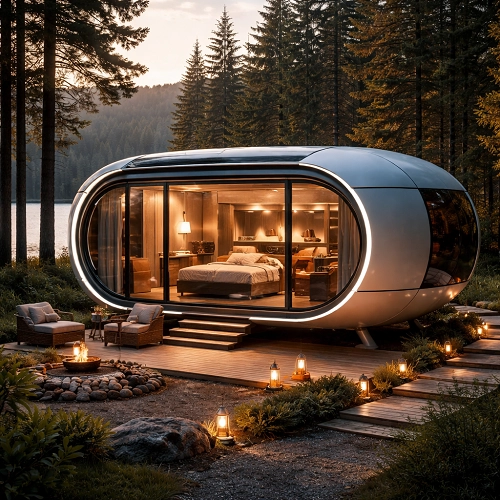
The Outdoor Space Capsule Tiny House represents a futuristic leap in prefabricated living spaces — blending innovative design, advanced materials, and smart living solutions into a compact, transportable dwelling. This in-depth article explores its architecture, technical specifications, performance attributes, advantages and limitations, and how it stacks up against other tiny homes and capsule-style prefabs on the market.
1. What is the Outdoor Space Capsule Tiny House?
The Outdoor Space Capsule Tiny House is a prefabricated modular living unit featuring a sleek, capsule-inspired exterior and a fully outfitted interior designed for modern living. Often marketed under models such as the Space Capsule D5/D7, it’s positioned as a versatile housing solution suitable for residential, recreational, and commercial applications like guest houses, glamping units, offices, or rental accommodations.
Unlike traditional stick-built homes that are constructed onsite, these capsule units are factory-built and delivered turnkey, ready for installation via crane onto simple supports with minimal foundation requirements.
2. Technical Specifications and Design Features
Dimensions & Space
- Typical size: ~8.5 m × 3.3 m × 3.2 m (D5 model)
- Floor area: ~28 m² (~301 ft²)
- Occupancy: Designed for 2–4 people depending on layout.
- Weight: ~6.8–7.5 tons, making it durable yet transportable.
Larger models like the D7 expand the footprint (~38 m²), offering more living space and flexibility.
Structure & Materials
The capsule is engineered for longevity and resilience:
- Hot-galvanized seismic steel frame for structural strength.
- Aluminum alloy exterior panels with fluorocarbon coating — resistant to corrosion, oxidation, and harsh weather.
- Double-glazed low-E tempered glass windows for improved thermal performance and UV protection.
Such materials offer durability, energy efficiency, and lower lifecycle maintenance compared to many traditional tiny homes.
Installation & Foundation
- Delivered complete and installed by crane.
- Foot support fixation systems — no need for deep foundations.
- Can be set up in days instead of months, reducing site disruption.
This ease of installation is a hallmark benefit of prefabricated capsule units, particularly in remote or uneven terrains.
Interior & Functional Amenities
A typical Outdoor Space Capsule includes:
- Defined living, sleeping, and bathroom zones.
- Dry-wet separated bathroom for hygiene and convenience.
- Panoramic or floor-to-ceiling windows for light and scenic views.
- Optional smart home controls, integrated utilities, and tailor-made layouts.
Many models also include:
- Intelligent access systems and LED lighting.
- Integrated electrical wiring and optional HVAC systems.
- Efficient insulation to maintain comfort in varied climates.
3. Key Performance Characteristics
Environmental Resistance
Capsule designs often boast:
- High wind and seismic resistance due to steel framing.
- Weatherproofing against rain, snow, and sun exposure with advanced coatings.
- Thermal insulation that enhances energy efficiency and lowers utility costs.
This makes them adaptable for year-round use in diverse environments.
Energy Efficiency & Sustainability
Prefabricated capsule homes generally emphasize:
- Superior insulation systems than many traditional tiny houses. Capsule units can be markedly more energy-efficient, sometimes reducing heating/cooling needs by over 60 % relative to poorly-insulated tiny homes.
Sustainability features can include:
- Optional solar power integration.
- Eco-friendly, recyclable materials.
- Minimal excavation or land disruption during setup.
4. Advantages
Speed of Deployment
Capsule units arrive fully built and ready for rapid installation, often in just days — a stark contrast to the weeks or months required for tiny homes built onsite.
High-Quality Materials
Use of galvanised steel and aluminum cladding enhances weather resistance, longevity, and low maintenance compared to wood-framed tiny homes.
Modularity & Customization
Many capsule manufacturers offer custom layouts and interior options, including smart home systems and integrated amenities.
Versatility
Ideal for:
- Residential living
- Guest accommodations
- Workspaces
- Vacation rentals (e.g., glamping pods)
5. Limitations and Considerations
Despite its appeal, capsule living isn’t for everyone:
- Limited Space: Even with smart layouts, the compact size makes interior space smaller than conventional homes. Small storage capacity can be a challenge for long-term living — a common issue among similar capsule designs.
- Regulatory and Permit Challenges: Depending on local building codes and zoning rules, placing such units may require permits, especially if used as primary residences.
- Brand Reliability & Quality Variance: Products sourced from global markets (e.g., China) can vary in build quality and after-sales support. Some listings online may be misleading without verified photos or factory audits.
6. Comparison With Other Tiny Homes
To appreciate where the Outdoor Space Capsule stands, it helps to see how it differs from other prefab tiny home trends:
| Feature |
Outdoor Space Capsule |
Standard Prefab Tiny Home |
Container/Pod Tiny House (Amazon listings) |
| Design |
Futuristic, capsule aesthetic |
Traditional cabin / modern box |
Modular pod design |
| Structure |
Steel + aluminum shell |
Various (wood, steel, SIPs) |
Steel / composite materials |
| Delivery |
Crane-installed, turnkey |
Often modular sections |
Delivered ready or with minimal assembly |
| Energy Efficiency |
High insulation & performance |
Variable |
Often moderate + optional upgrades |
| Smart Features |
Often integrated |
Optional |
Increasingly standard |
| Typical Use Cases |
Residential / commercial pods |
Residential / guest houses |
Recreational / Airbnb / backyard |
| Installation Speed |
Days |
Weeks to months |
Days |
| Typical Cost Range |
Mid-high based on customization |
Wide range |
Lower to mid range |
In contrast, many tiny homes marketed on e-commerce platforms feature:
- Fully furnished interiors
- Smart appliances
- Panoramic windows and sometimes skylights
but vary widely in quality, insulation, and structural robustness.
7. Ideal Applications
The Outdoor Space Capsule excels when used for:
- Eco-resorts and glamping sites seeking standout units.
- Weekend cabins / guest homes with modern appeal.
- Backyard home offices or studios with smart features.
- Temporary or seasonal housing (e.g., construction sites, scenic retreats).
Its quick install and minimal site impact make it particularly attractive for remote, scenic, or regulated locations where traditional construction is costly or disruptive.
The Outdoor Space Capsule Tiny House reflects the future of modular living — blending robust engineering, efficient fabrication, and flexible design into a single package. While not without limitations, its combination of ease of deployment, strong environmental resistance, and modern amenities makes it an intriguing option for individuals and businesses alike.
Whether chosen for primary living, pocket retreats, or income-generating accommodations, the capsule concept continues to gain traction as a compelling alternative to traditional tiny homes and prefab cabins.