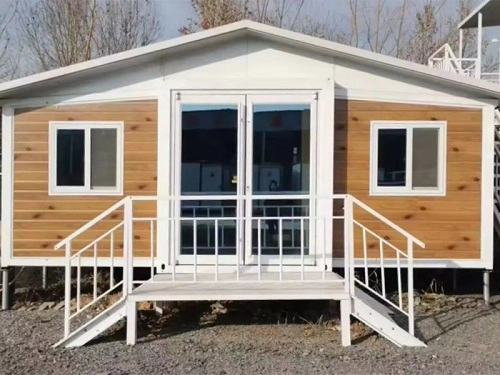
Folding prefabricated houses are at the forefront of a transformative shift in the built environment, combining advanced engineering, sustainability, and practical living solutions.
Understanding Folding Prefabricated Houses
Folding prefabricated houses are modular living units constructed primarily offsite and designed to “unfold” into a complete living space onsite. Unlike traditional modular homes composed of fixed box-like sections, folding houses are engineered with hinges, sliding panels, or telescoping components that expand into larger spatial configurations.
Key defining attributes include:
- Portability: Designed for efficient transport via flatbed truck or container.
- Rapid Deployment: Minimal onsite assembly time—often within hours.
- Compact Transit Footprint: Folded form adheres to standard transport width/height regulations.
- Transformative Spaces: Dynamic unfolding to create usable interior and exterior areas.
Historical Context and Evolution
The concept of prefabricated housing dates back to early 20th century industrial models, with notable examples such as the Sears kit homes and post-WWII mass-produced dwellings. Folding designs emerged from military and disaster-relief research, where the need for quickly deployable shelters led to innovations like folding canvas structures and portable HESCO defensive barriers.
Contemporary folding prefabricated houses build upon these precedents, driven by advances in materials, digital design tools, and mass customization capabilities.
Core Design Principles
Compactness and Transformability
Folding design emphasizes geometry that minimizes volume during transport.
Common mechanisms include:
- Hinged Panels: Walls or roof sections that pivot outward.
- Telescopic Frames: Nested components that extend telescopically.
- Slide-Out Pods: Sections that slide from the main core to increase footprint.
These mechanisms must balance ease of operation with structural integrity and weatherproofing.
Structural Engineering
Folding houses demand rigorous analysis to ensure stability in both folded and expanded states.
Key structural concerns include:
- Load Paths: Understanding how weight and forces distribute once unfolded.
- Joint Strength: Hinges and locking systems must resist dynamic and static loads.
- Wind and Seismic Resistance: Reinforced design to meet local codes.
Finite element modeling (FEM) and physical prototyping are essential in validating performance.
Materials and Manufacturing
Lightweight Structural Materials
Reducing weight is crucial for transport efficiency:
- Steel Frames: High-strength, relatively lightweight frames form the skeleton.
- Aluminum Alloys: Used for non-load-bearing components to minimize weight.
- Advanced Composites: Carbon fiber or fiberglass reinforcements in select designs.
Wall and Insulation Systems
Energy performance and comfort hinge on well-engineered enclosure systems:
- Structural Insulated Panels (SIPs): Foam cores sandwiched between rigid skins.
- Aerogel Insulation: Ultra-high-performance insulator for thin applications.
- Weather Seals: Compression gaskets and waterproof membranes around moving joints.
Manufacturing Processes
Prefabricated components are typically produced using:
- CNC Machining: For precision cut panels and frame components.
- Robotic Welding: Ensures consistent structural joints.
- Modular Subassembly Lines: Allows different modules (kitchen, bathroom) to be built concurrently.
Folding Mechanisms and Deployment Systems
Hinged Panel Systems
Hinged panels rotate around fixed axes.
Technical design must address:
- Pivot Bearings: Load-bearing hinges with corrosion resistance.
- Locking Struts: Secure panels in place once unfolded.
- Actuation: Manual, hydraulic, or electric systems for automated deployment.
Telescoping and Slide Systems
Extending volumes require:
- Guide Rails: Precision rail systems to maintain alignment.
- Sealing Mechanisms: Overlapping seals to prevent air/water infiltration.
- Dampers: Controlled motion to prevent slamming and wear.
Robotics and Control
Advanced systems may incorporate:
- Sensors: Position and load sensors for safe operation.
- Control Software: Automated sequences with failsafes and emergency stops.
- Remote Operation: Smartphone or tablet control during deployment.
Utilities and Building Systems Integration
Electrical and Lighting
Pre-wired harnesses connect to main panels via quick-release connectors. LEDs and smart fixtures maximize energy efficiency.
Plumbing and HVAC
- Flexible Connections: Quick-connect plumbing for water and waste.
- Compact HVAC: Mini-split systems or integrated radiant heating panels.
- Water Management: Rainwater harvesting and greywater reuse in sustainable models.
Renewable Energy Integration
Solar photovoltaic panels may be integrated into roof panels that unfold, paired with battery storage systems.
Transportation Logistics
Folding prefabricated houses are designed to conform to transport regulations:
- Standardized Dimensions: Typically within 8-10 ft wide, 13.5-14 ft tall.
- Protected Components: Reinforced corners and tie-down points.
- Specialized Trailers: Hydraulic tilt or flatbed systems.
Escort vehicles and permits may be necessary for oversized loads.
Regulatory and Code Compliance
Folding prefabricated houses must meet local building codes, zoning regulations, and, when movable, RV or tiny home standards.
Key compliance areas include:
- Structural Load Ratings
- Fire Safety and Egress
- Energy Codes (e.g., insulation, air leakage)
- Accessibility Standards
Certification from third-party agencies (e.g., ICC, CSA) can streamline approvals.
Sustainability and Environmental Impact
Many folding prefabricated houses score high in sustainability metrics due to:
- Reduced Onsite Waste: Factory precision minimizes material waste.
- Efficient Transport: Compact form reduces fuel usage.
- Energy-Efficient Operation: High-performance envelopes and systems.
Life cycle assessments often show lower embodied energy compared to conventional construction.
Use Cases and Market Trends
Disaster and Emergency Housing
Rapid deployment makes these houses ideal for disaster relief and temporary shelter.
Remote Work and Off-Grid Living
Accessible housing in rural or off-grid settings due to self-contained systems.
Affordable and Micro Housing
Cost-effective for single residents or small families, especially in high-cost urban areas.
Commercial and Site Facilities
Temporary offices, clinics, and pop-up retail spaces leverage folding designs.
Challenges and Future Directions
While promising, folding prefabricated houses face challenges:
- Cost Barriers: Advanced materials and mechanisms can raise upfront costs.
- Market Acceptance: Cultural perceptions of non-traditional housing.
- Technical Durability: Long-term performance of moving parts.
Future innovations may include modular AI-controlled deployment, robotics in manufacturing, and advanced materials that self-assemble or self-repair.
Folding prefabricated houses represent a compelling intersection of engineering ingenuity, practical design, and future-focused living. As housing demands evolve and technology advances, these dynamic structures offer scalable, sustainable, and versatile solutions that could reshape the way we think about living spaces—both temporary and permanent.